Cells may be microscopic, but they are responsible for everything from helping bacteria survive in soil to keeping the human body alive. Every living organism is made of cells, yet those cells are not all built in the same way.
Biologists generally divide cellular life into two major categories: prokaryotic and eukaryotic cells. At first glance, the difference might seem simple-one has a nucleus and the other does not. But the story goes much deeper than that.
Understanding prokaryotic vs. eukaryotic cells helps explain how organisms store DNA, produce energy, reproduce, and organize their internal machinery. It also gives us a clearer picture of why bacteria work differently from plants, animals, fungi, and other organisms.
The good news is that you do not need to memorize a huge list of complicated terms. Once you understand a few structural differences, comparing these two cell types becomes surprisingly straightforward.
What Are Prokaryotic Cells?
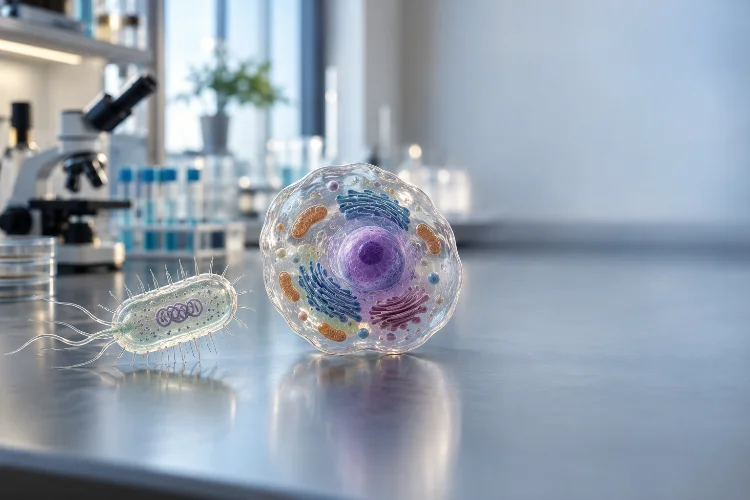
Prokaryotic cells are relatively simple cells that do not have a membrane-bound nucleus. Instead of storing DNA inside a nucleus, their genetic material is found in a region of the cytoplasm known as the nucleoid.
Organisms classified as prokaryotes belong to two domains: Bacteria and Archaea. They are generally single-celled organisms, although they can form colonies or communities containing huge numbers of individual cells.
A typical prokaryotic cell contains a plasma membrane, cytoplasm, ribosomes, and DNA. Many also have additional structures such as a cell wall, capsule, flagella, or pili that help with protection, movement, and interaction with the surrounding enviroment.
Prokaryotic cells are also relatively small. Many fall within a range of roughly 1–10 micrometers, although size can vary considerably between species.
A familiar example is Escherichia coli, or E. coli, a bacterium commonly found in the intestines of humans and other animals.
What Are Eukaryotic Cells?
Eukaryotic cells are generally larger and more structurally complex. Their defining feature is a membrane-bound nucleus that keeps most of the cell’s DNA physically seperate from the cytoplasm.
Animals, plants, fungi, and protists are all eukaryotes. Some eukaryotic organisms consist of only one cell, while others-including humans-are multicellular organisms built from enormous numbers of specialized cells.
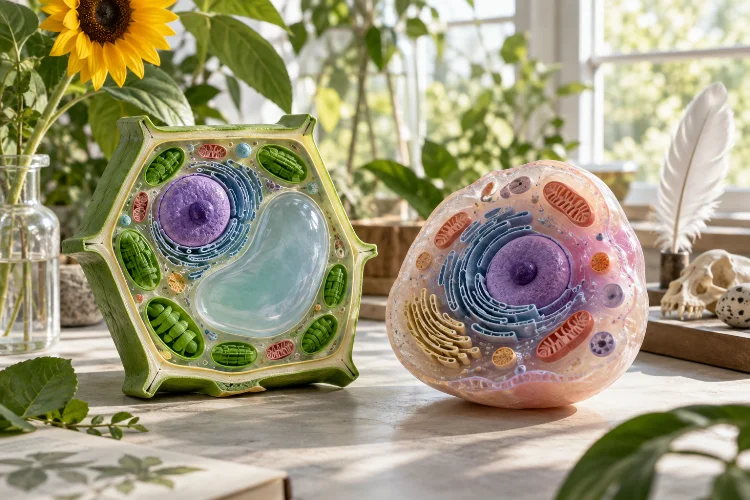
Eukaryotic cells usually contain several membrane-bound organelles. These include mitochondria, the endoplasmic reticulum, Golgi apparatus, lysosomes, and other specialized cellular compartments. Plant cells also contain structures such as chloroplasts and a large central vacuole.
These organelles allow different processes to happen in dedicated areas. In simple terms, a eukaryotic cell works somewhat like a factory with separate departments, while a prokaryotic cell performs more of its activities within one shared internal space.
Prokaryotic vs. Eukaryotic Cells: The Main Differences
The easiest way to understand the two cell types is through direct comparision.
| Feature | Prokaryotic Cells | Eukaryotic Cells |
|---|---|---|
| Nucleus | No membrane-bound nucleus | Membrane-bound nucleus |
| DNA | Usually circular | Usually multiple linear chromosomes |
| Organelles | No typical membrane-bound organelles | Many membrane-bound organelles |
| Typical Size | About 1–10 µm | About 10–100 µm |
| Organisms | Bacteria and Archaea | Animals, Plants, Fungi, Protists |
| Cellular Organization | Usually unicellular | Unicellular or multicellular |
| Cell Division | Mainly binary fission | Mitosis and meiosis |
The most important distinction is internal organization. Both cell types have DNA, ribosomes, cytoplasm, and a plasma membrane, but eukaryotic cells compartmentalize many biological processes inside specialized structures.
The Nucleus Makes a Major Difference
In prokaryotes, DNA is located within the nucleoid region and is not enclosed by a nuclear membrane. In eukaryotes, chromosomes are kept inside the nucleus.
That separation creates another level of cellular control. The nuclear envelope contains pores that regulate the movement of proteins, RNA, and other molecules between the nucleus and cytoplasm.
How DNA Is Organized Differently
Both prokaryotic and eukaryotic cells depend on DNA to store genetic information, but they package that information differently.
Prokaryotes typically contain their main genetic information in a circular chromosome. Many bacteria also carry smaller circular pieces of DNA known as plasmids, which can contain additional genes.
Eukaryotic DNA, by contrast, is generally organized into multiple linear chromosomes. In humans, for example, most body cells contain 46 chromosomes arranged in 23 pairs.
Eukaryotic chromosomes are associated with proteins that help package long DNA molecules into a compact structure. This organization becomes especially important during cell division, when chromosomes must be copied and distributed accurately.
Despite these differences, DNA performs the same fundamental job in both cell types: storing the instructions needed for cellular structure, function, growth, and reproduction.
Organelles and Cellular Compartmentalization
One of the biggest advantages of eukaryotic cells is compartmentalization.
Organelles create specialized environments where particular chemical reactions can happen efficiently. Mitochondria, for instance, play a central role in producing ATP through cellular respiration, while the Golgi apparatus modifies and sorts proteins and lipids.
The endoplasmic reticulum helps produce proteins and lipids, while lysosomes contain enzymes involved in breaking down cellular materials. Plant cells take specialization even further by using chloroplasts to capture light energy during photosynthesis.
Prokaryotes lack these classic membrane-bound compartments, but that does not mean they are primitive or ineffective. Bacteria and archaea can carry out sophisticated biochemical reactions using their plasma membranes, cytoplasm, proteins, and other cellular structures.
Their simpler organization can actually be extremely efficient for rapid growth and adaptation.
Cell Size and Why It Matters
Eukaryotic cells are typically larger than prokaryotic cells. A common range for eukaryotic cells is around 10-100 micrometers, while many prokaryotes are closer to 1–10 micrometers.
Being small offers prokaryotes an important advantage: a high surface-area-to-volume ratio. This allows nutrients and waste products to move between the cell and its surroundings efficiently.
Larger eukaryotic cells face a different challenge. Their internal organelles and membrane systems help organize biochemical reactions so that processes do not have to occur randomly throughout a large cytoplasmic space.
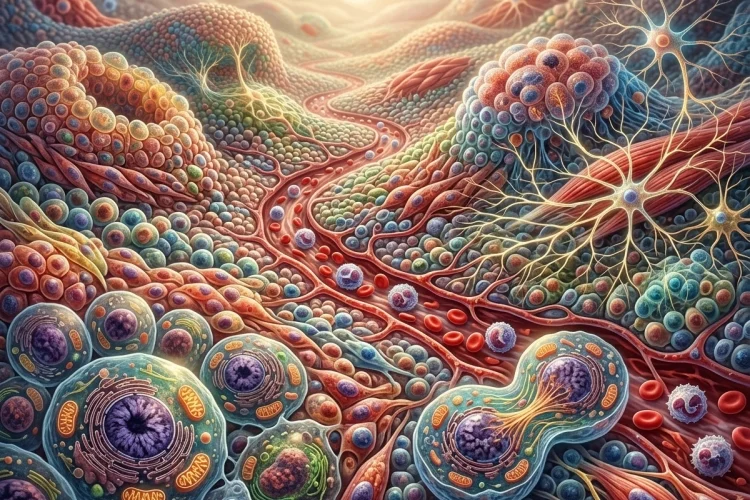
This internal organization allows much greater cellular specialization. A nerve cell, muscle cell, leaf cell, and fungal cell may all be eukaryotic, yet they can perform remarkably different jobs.
How Do Prokaryotic and Eukaryotic Cells Reproduce?
Prokaryotic cells usually reproduce through binary fission. The cell copies its DNA, grows, and then divides into two new cells.
Under favorable conditions, this process can occur very quickly in certain bacterial species. Rapid reproduction helps explain why bacterial populations can increase dramatically when nutrients, temperature, and other conditions are suitable.
Eukaryotic cells use a more complicated process known as mitosis for growth, tissue repair, and many forms of asexual reproduction. During mitosis, duplicated chromosomes are carefully separated into two daughter cells.
Eukaryotes involved in sexual reproduction can also undergo meiosis, a specialized form of cell division that produces reproductive cells with reduced chromosome numbers.
The greater complexity of eukaryotic reproduction reflects the challenge of accurately managing multiple chromosomes and sophisticated internal structures.
What Do Prokaryotic and Eukaryotic Cells Have in Common?
With so much attention on their differences, it is easy to forget that both types of cells share several essential characteristics.
Every prokaryotic and eukaryotic cell has a plasma membrane, genetic material, cytoplasm, and ribosomes.
Ribosomes are especially important because they translate genetic instructions into proteins, which perform countless structural and chemical functions inside organisms.
These similarities are powerful evidence that all cellular life shares fundamental biological mechanisms.
Another fascinating connection comes from the endosymbiotic theory. Scientists propose that mitochondria and chloroplasts originated from ancient prokaryotic organisms that entered into long-term relationships with ancestral cells.
Over evolutionary time, they became permanent parts of eukaryotic cells.
This means the relationship between the two types of cells is not simply a matter of “simple versus complex.” Their evolutionary histories are deeply connected.
Why Does the Difference Matter?
Learning the difference between prokaryotic and eukaryotic cells is not just an academic exercise. It has practical importance in medicine, biotechnology, genetics, agriculture, and environmental science.
For example, many antibiotics work by targeting bacterial structures or biological processes that differ from those in human cells. Understanding those differences allows scientists to develop treatments that affect bacteria while reducing damage to human tissues.
Cell structure also matters in genetic engineering. Researchers working with bacterial cells may use different methods than scientists modifying plant, animal, or fungal cells because gene expression and cellular organization differ between prokaryotes and eukaryotes.
Even everyday processes-from yogurt fermentation to plant growth and human digestion-depend on the activities of these two major cellular systems.
The difference between prokaryotic vs. eukaryotic cells mainly comes down to how cells organize their internal components.
Prokaryotes lack a membrane-bound nucleus and usually have a simpler internal structure, while eukaryotes contain a nucleus and specialized organelles that compartmentalize cellular functions.
Still, the two groups share essential features such as DNA, ribosomes, cytoplasm, and a plasma membrane. Their similarities reveal the common foundations of life, while their differences show how evolution has produced remarkably diverse cellular strategies.
The next time you encounter bacteria, plants, fungi, animals, or microscopic organisms, remember that their biology begins at the cellular level.
Keep exploring cell structure, DNA, organelles, and evolution-the deeper you look, the more fascinating the occurence of life becomes.