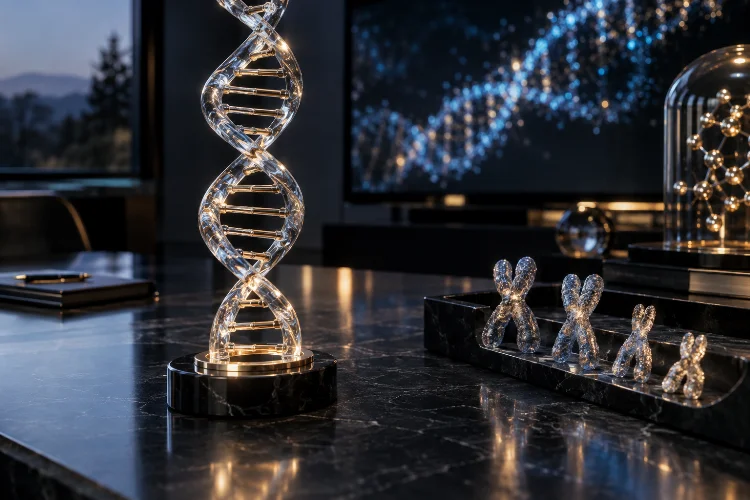
DNA, genes, and chromosomes are three words that appear almost everywhere in biology. You hear them when people talk about inherited traits, genetic diseases, ancestry tests, evolution, and even personalized medicine.
The confusing part is that these terms are closely connected, but they do not mean the same thing. Think of genetic information as a massive biological instruction system.
DNA is the molecule that stores the information, genes are specific stretches of that DNA with biological functions, and chromosomes are organized packages that contain long DNA molecules.
That simple idea is the foundation of the genes, DNA, and chromosomes relationship.
Understanding the difference helps make genetics much less intimidating. It also explains how characteristics can pass from parents to children, why cells need to copy genetic material before dividing, and how tiny changes in DNA can sometimes affect health or physical traits.
Let’s break everything down without turning it into a complicated genetics lecture.
What Is DNA?
DNA stands for deoxyribonucleic acid. It is the molecule that carries genetic information needed for the development and functioning of living organisms. In humans, most DNA is stored inside the nucleus, although a smaller amount is found in mitochondria.
DNA is built from smaller chemical units called nucleotides. Each nucleotide contains one of four bases: adenine (A), thymine (T), cytosine (C), or guanine (G).
These bases pair in predictable ways: A pairs with T, while C pairs with G. Two DNA strands twist around one another to produce the famous double helix structure.
The order of those bases matters.
Imagine the sequence:
A-T-G-C-C-A-T…
Changing the order changes the information contained in that section of DNA, much like changing letters in a sentence can change its meaning.
The human genome contains roughly three billion DNA bases. More than 99 percent of these bases are shared among people, although variations in the remaining portion contribute to biological differences between individuals.
In other words, DNA is the physical molecule where hereditary information is stored.
What Is a Gene?
A gene is a particular region of DNA that has a biological function.
Genes are traditionally described as the basic units of heredity. Many contain instructions that cells use to produce proteins, while others provide information for making functional RNA molecules or help regulate biological processes.
Proteins are incredibly important because they perform countless jobs. They can act as enzymes, structural components, receptors, antibodies, hormones, and molecular machines.
Take the CFTR gene as an example. It contains information needed to produce a protein involved in controlling the movement of chloride ions across cell membranes. Certain variants of this gene can cause cystic fibrosis.
Genes can vary dramatically in length. Some contain only a few hundred DNA base pairs, while others extend across more than two million.
Humans have roughly 20,000 protein-coding genes, although only a relatively small portion of our entire genome directly codes for proteins.
So, a gene is not something seperate from DNA. A gene is made of DNA.
What Is a Chromosome?
If DNA molecules are extremely long, cells face an obvious problem: how can all that genetic material fit inside a microscopic nucleus?
The answer is packaging.
A chromosome is an organized structure containing a long DNA molecule associated with proteins. In humans and many other eukaryotes, DNA wraps around proteins called histones, helping compact the genetic material so it can fit inside the nucleus.
Chromosomes become especially condensed during cell division, which is why their familiar shapes are easiest to observe at that stage.
Most human body cells normally contain 46 chromosomes arranged in 23 pairs. One chromosome in each pair comes from the mother and the other from the father. Twenty-two pairs are autosomes, while the remaining pair consists of sex chromosomes.
Each chromosome contains many genes distributed along its DNA.
Chromosome 7, for example, contains the CFTR gene mentioned earlier, along with many other genes and noncoding DNA regions.
This means chromosomes are essentially highly organized packages of genetic material rather than individual instructions themselves.
Genes vs. DNA vs. Chromosomes: The Main Difference
The easiest way to understand the comparision is to look at how the three fit together.
| Term | What It Is | Main Role |
|---|---|---|
| DNA | A molecule made from nucleotide sequences | Stores genetic information |
| Gene | A functional segment of DNA | Provides information for proteins, RNA, or regulation |
| Chromosome | DNA packaged with proteins | Organizes and carries large amounts of DNA |
A useful analogy is to imagine an enormous collection of books.
DNA is like the written language used throughout the collection. The sequence of its chemical bases carries information much like letters carry information in written sentences.
Genes are like individual recipes or instructions found within those books. Each has a particular biological function.
Chromosomes are like individual volumes that organize large amounts of that information into manageable packages.
The analogy is not perfect because real genetics is far more complex, but it makes the basic relationship easier to visualize.
Genes are made from DNA, and genes are located on chromosomes.
How DNA Becomes a Chromosome
Human DNA would be extremely difficult for cells to manage if it simply floated around as loose strands.
Instead, DNA interacts with proteins to form a material called chromatin. Histone proteins help organize and compact DNA by allowing it to wrap around them.
You can imagine this process somewhat like winding a very long thread around spools.
Chromatin can exist in different levels of compaction depending on what the cell is doing. Certain regions may remain relatively accessible when genes need to be used, while DNA becomes much more tightly packed when chromosomes prepare for cell division.
Why Does DNA Need So Much Packaging?
One reason is simple space.
Human cells contain an extraordinary amount of genetic material compared with the tiny size of the nucleus. Efficient packaging allows this information to fit inside while still remaining accessible to cellular machinery.
Organization also helps cells control which genes are active.
Cells in your muscles and neurons generally contain the same genome, yet they look and behave very differently. Part of that difference comes from which genes are switched on or off in each cell type.
Genetic packaging is therefore not just about storage. It also contributes to the regulation of gene activity.
How Genes Pass Traits from Parents to Children
Genes help explain inheritance, the biological process through which genetic information moves from one generation to the next.
Humans generally carry two copies of many genes-one associated with the chromosome inherited from the mother and another associated with the chromosome inherited from the father. Different versions of a genomic sequence at a particular location are commonly called alleles.
These genetic differences can influence traits.
For example, variations in genes may affect characteristics such as blood type, pigmentation, metabolism, or susceptibility to certain diseases.
But genetics does not work like a simple menu where one gene always equals one visible characteristic.
Many human traits are polygenic, meaning they are influenced by numerous genes. Environmental factors can also play a major role.
Height is a good example. Genetics contributes strongly to height, but nutrition, childhood health, hormones, and other environmental conditions can also influence how tall someone ultimately becomes.
Understanding inheritence therefore means considering both biology and environment rather than assuming DNA determines everything about a person.
What Is the Genome?
Another word you will frequently encounter when learning about DNA is genome.
A genome is the complete set of DNA instructions found in a cell or organism. For humans, this includes DNA organized into the 23 chromosome pairs in the nucleus as well as a smaller amount of DNA located in mitochondria.
So where does the genome fit into our earlier analogy?
If chromosomes are individual books, the genome is closer to the entire collection.
The human genome contains roughly three billion nucleotide bases and thousands of genes, alongside large amounts of DNA that do not directly encode proteins.
Scientists study entire genomes through a field known as genomics. Genomics looks not only at individual genes but also at genetic variants, regulatory regions, interactions between genes, and patterns across large stretches of DNA.
This approach has become increasingly important in medicine, agriculture, evolutionary biology, ancestry research, and biotechnology.
What Happens When DNA Changes?
DNA sequences are not always identical.
A change in a DNA sequence is commonly called a variant or, depending on context, a mutation. These changes can involve something as small as a single nucleotide or much larger sections of genetic material.
Many DNA variations have little or no noticeable effect. Others influence traits, and some can affect how proteins function or contribute to disease.
Changes can occur naturally when DNA is copied, or they may arise after exposure to certain environmental factors.
The location of a change matters tremendously.
A variation in one region may have almost no biological consequence, while a change affecting an important gene or regulatory sequence could significantly alter cellular function.
That is why modern genetics does not simply ask whether DNA is different. Scientists also investigate where the difference occurs, what function that region normally has, and how the change affects an organsim.
Why Understanding Genes, DNA, and Chromosomes Matters
These concepts may sound theoretical, but they connect directly to real-world science.
Doctors can examine chromosomes to investigate certain genetic conditions. Researchers can analyze DNA variants associated with disease risk. Genetic testing can sometimes identify inherited variants or help guide decisions about medical treatment.
DNA analysis is also important outside medicine.
Forensic scientists can compare genetic samples, evolutionary biologists use DNA to investigate relationships between species, and agricultural researchers study genes associated with traits such as disease resistance or drought tolerance.
Modern biotechnology goes even further. Techniques such as genome sequencing and gene editing allow researchers to investigate biological processes at a level that would have been unimaginable only a few decades ago.
Understanding the basic relationship between these three terms gives you the foundation needed to understand all of those technologies.
The relationship between genes, DNA, and chromosomes becomes much simpler once you see how they fit together. DNA is the molecule that stores genetic information.
Genes are functional sections of DNA, while chromosomes package long DNA molecules together with proteins so cells can organize and manage their genetic material.
Humans normally have 46 chromosomes in most body cells, and those chromosomes collectively contain billions of DNA bases and thousands of genes.
Instead of memorizing each term separately, remember the hierarchy: genes are made of DNA, genes are located on chromosomes, and chromosomes help organize the genome.
Once that foundation is clear, topics such as inheritance, mutations, genetic testing, genome sequencing, and biotechnology become much easier to understand. Keep exploring genetics-the microscopic instructions inside cells tell one of biology’s biggest stories.