
Have you ever wondered why siblings can look similar but still have different eye colors, heights, personalities, or health risks?
The answer often begins with genetics, the branch of biology that explores how biological information is passed from one generation to the next. So, what is genetics and why is it important? Genetics is the study of genes, heredity, and variation in living organisms.
It helps explain how traits are inherited, why individuals within the same species are different, and how changes in DNA can affect health and development. Genetics is not only about family resemblance.
It plays a major role in diagnosing diseases, selecting medical treatments, improving crops, protecting endangered species, and understanding evolution.
Researchers also use genetic information to study ancestry, identify microorganisms, and investigate how organisms respond to their environments.
Although the subject may sound complicated, its basic ideas are surprisingly approachable. Once you understand DNA, genes, chromosomes, and inheritance, many other areas of biology become easier to connect.
What Is Genetics?
Genetics is the scientific study of heredity and biological variation. Heredity describes how genetic information passes from parents to offspring, while variation refers to the differences found among individuals.
A gene is generally considered the basic unit of inheritance. Genes contain information that helps determine physical and biological characteristics, although most traits are influenced by several genes and environmental factors rather than a single instruction.
Geneticists study how genes function, how they are inherited, and how changes in genetic material affect organisms. Their research may involve humans, animals, plants, fungi, bacteria, or other forms of life.
The field includes many specialties, such as molecular genetics, medical genetics, population genetics, developmental genetics, and evolutionary genetics. Each approaches biological inheritance from a slightly different perspective.
DNA, Genes, and Chromosomes Explained
To understand genetics, it helps to know how DNA, genes, and chromosomes are connected.
DNA, or deoxyribonucleic acid, is the molecule that stores biological instructions. Most of the DNA in a human cell is located inside the nucleus, although a small amount is also found in mitochondria.
1. What Are Genes?
Genes are specific regions of DNA. Many genes contain instructions for producing proteins, which perform jobs such as supporting cell structure, speeding up chemical reactions, transporting materials, and sending signals.
However, not every gene directly produces a protein. Some genes create functional RNA molecules or help regulate the activity of other genes. Gene expression describes the process through which genetic information is converted into a functional product.
2. What Are Chromosomes?
DNA is packaged with proteins into structures called chromosomes. Humans usually have 23 pairs of chromosomes in the nucleus of most cells, receiving one set from each biological parent.
The complete collection of DNA instructions in a cell is called the genome. Humans have approximately 20,000 protein-coding genes distributed throughout their genome.
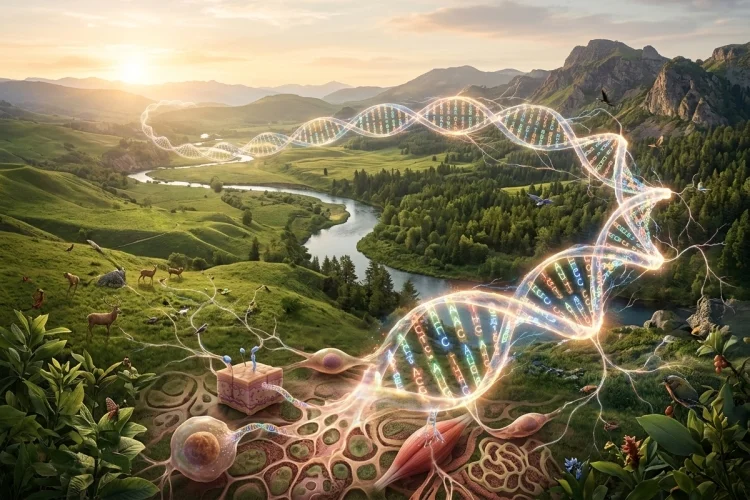
You can think of the genome as a large instruction library. Chromosomes are the volumes, genes are individual sections, and DNA is the language in which those instructions are written.
How Does Genetic Inheritance Work?
Inheritance occurs when parents pass genetic information to their offspring. Different versions of the same gene are known as alleles.
For many genes, a person inherits one allele from each biological parent. The combination of alleles is called the genotype, while the observable result is known as the phenotype.
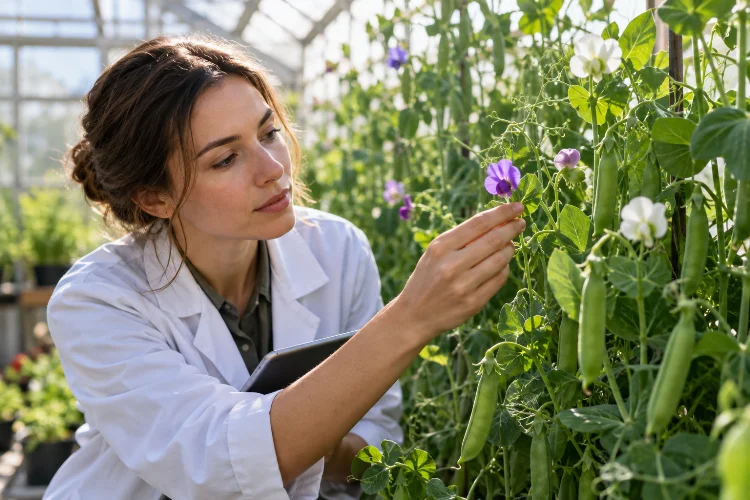
Gregor Mendel helped establish the basic principles of inheritance through experiments with pea plants during the nineteenth century. He studied clearly distinguishable traits, such as flower color and seed shape, and observed predictable patterns across generations.
Some alleles may be described as dominant or recessive. A dominant allele can influence the phenotype when only one copy is present, while a recessive trait usually appears when an individual inherits two recessive copies.
However, real genetics is often more complex than simple dominant and recessive patterns. Some traits involve multiple genes, incomplete dominance, codominance, sex-linked inheritance, or interactions between genes and environmental conditions.
Certain genetic conditions are associated with variants in a single gene and may follow recognizable inheritance patterns. Others result from changes involving chromosomes, several genes, or a combination of genetic and environmental influences.
Genes Are Not the Same as Destiny
Genes influence many characteristics, but they do not operate in isolation. Nutrition, physical activity, temperature, stress, exposure to chemicals, and other environmental factors can affect how traits develop.
Height is a familiar example. Genetics strongly influences a person’s potential height, but childhood nutrition and health can affect whether that potential is reached.
Gene activity can also vary between cells. A nerve cell and a muscle cell usually contain the same DNA, yet they look and behave differently because different sets of genes are active.
This selective gene expression allows cells to specialize. It also shows why having a gene does not always mean that a particular outcome will definitely occur. Genetic information may increase susceptibility to a condition without guaranteeing that the condition will develop.
Genetics is therefore best understood as one part of a larger biological system. Genes, lifestyle, environment, development, and chance can all contribute to an individual’s characteristics.
Why Genetics Is Important in Health and Medicine
Genetics helps healthcare professionals understand why certain medical conditions run in families. Genetic testing can look for DNA changes that may help diagnose an inherited disorder or provide information relevant to medical care.
A genetic result does not always deliver a simple yes-or-no answer. Some variants directly cause disease, while others only increase risk. Many common conditions, including heart disease and diabetes, are influenced by multiple genes together with lifestyle and environmental factors.
Genetics also supports precision medicine. Instead of assuming that one treatment will work equally well for everyone, healthcare professionals may consider biological differences when selecting prevention or treatment strategies.
Pharmacogenomics
Pharmacogenomics examines how DNA influences a person’s response to medication. Genetic differences can sometimes affect whether a drug works well, causes side effects, or requires a different dose.
This information may help doctors select safer or more effective medicines in particular situations. However, pharmacogenomic testing is not available or necessary for every drug or patient.
Genetic counseling is another important service. A trained professional can help individuals and families understand test results, inheritance patterns, possible risks, and the limitations of available information.
How Genetics Supports Agriculture and Conservation
Genetic knowledge is valuable far beyond human medicine. Farmers and plant scientists use it to develop crops with desirable characteristics, such as improved nutrition, disease resistance, drought tolerance, or higher productivity.
Animal breeding also uses inheritance principles. Breeders may select individuals with characteristics related to health, behavior, milk production, growth, or resistance to particular diseases.
Genetics can also support conservation. Small wildlife populations may lose genetic diversity, making them more vulnerable to disease and environmental change.
Researchers can analyze DNA to estimate relationships, identify distinct populations, and plan breeding or habitat-management programs.
In microbiology, genetic analysis helps scientists identify bacteria, viruses, and other microorganisms. It can also reveal how pathogens change, spread, or develop resistance to treatments.
These applications show that genetic science influences food security, environmental protection, public health, and the management of natural resources.
Genetics, Genomics, and Responsible Use
Genetics and genomics are related, but they are not exactly the same. Genetics often focuses on individual genes and inheritance, while genomics studies the complete genome and the interactions among many genes.
Modern researchers can analyze large amounts of DNA much faster than earlier scientists could. These advances create opportunities for better diagnosis, disease prevention, biotechnology, and personalized treatment.
However, genetic information is also personal and potentially sensitive. Questions about privacy, consent, data security, unequal access, and possible discrimination must be taken seriously.
Genetic tests may also produce uncertain or unexpected results. A person could discover a health risk or biological relationship that affects other family members as well.
For these reasons, genetic information should be interpreted carefully. Medical decisions should be discussed with qualified healthcare professionals rather than based only on online reports or direct-to-consumer test results.
Genetics is the study of genes, heredity, and biological variation. It explains how DNA carries information, how traits pass between generations, and why individuals are never completely identical.
Its importance reaches far beyond inherited appearance. Genetics supports disease diagnosis, precision medicine, pharmacogenomics, agriculture, conservation, biotechnology, and the study of evolution.
It also reminds us that genes are influential but do not work alone; environment and lifestyle matter too. Understanding basic genetics makes it easier to evaluate health information and explore other areas of biology.
Continue your learning by studying DNA replication, gene expression, mutations, and inheritance patterns. The more you understand your biological instructions, the clearer the science of life becomes.