Your body may look like one complete structure, but it is actually built from trillions of tiny living units working together. They help you breathe, think, move, heal injuries, digest food, and fight infections-all without you noticing most of the activity.
These microscopic units are called cells. So, what is a cell? A cell is the smallest structural and functional unit capable of performing the basic processes associated with life.
Some organisms consist of only one cell, while plants, animals, and humans depend on enormous communities of specialized cells.
Almost everything that happens inside a living organism begins at the cellular level. That is why understanding cell structure and function provides a foundation for learning about genetics, anatomy, medicine, microbiology, and many other areas of science.
This beginner’s guide explains what cells are, what they contain, how the main cell types differ, and why these tiny biological systems are so important.
What Is a Cell?
A cell is the smallest fundamental unit of structure and function in a living organism. It can take in materials, process energy, respond to changes, maintain internal conditions, and produce new cells.
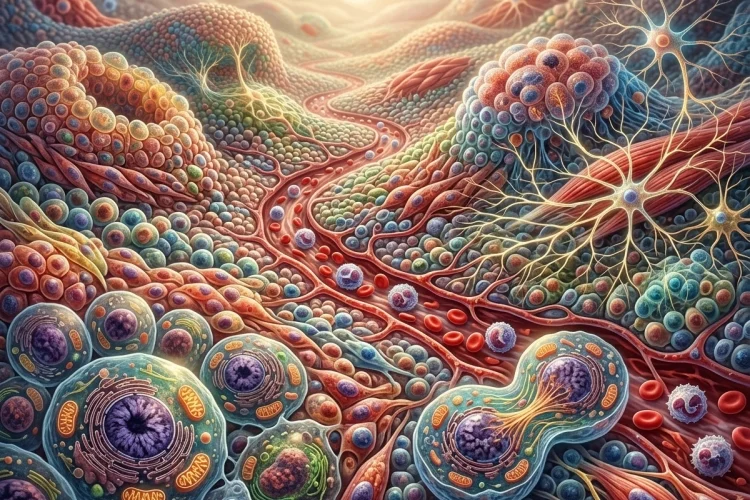
A bacterium performs all these jobs within one cell. In multicellular organisms, cells divide the work. Muscle cells produce movement, nerve cells carry signals, and red blood cells transport oxygen.
Cell biology is the scientific study of cell structure, function, communication, movement, development, and reproduction. Understanding these processes helps researchers explain how organisms grow, stay healthy, and develop disease.
A Quick Look at Cell Theory
Cell theory is based on three central ideas: all living organisms are made of cells, cells are the basic units of life, and new cells come from existing cells.
These ideas became possible after microscopes allowed scientists to examine structures invisible to the naked eye. The work of Matthias Schleiden and Theodor Schwann during the nineteenth century helped establish the cell as the fundamental unit of living organisms.
What Do All Cells Have in Common?
Cells vary greatly in size, shape, and purpose, but all known cells share four essential components: a plasma membrane, cytoplasm, DNA, and ribosomes. These features appear in simple bacteria as well as complex plant and animal cells.
The plasma membrane forms the cell’s outer boundary. It separates the inside of the cell from its surroundings and controls which substances enter or leave.
Some materials can cross the membrane easily, while others require special transport proteins or cellular energy. This selective control helps the cell maintain the internal conditions it needs to survive.
Cytoplasm is the water-rich material inside the membrane where many chemical reactions occur. DNA stores inherited biological instructions, while ribosomes use genetic information to assemble proteins.
Proteins perform a huge variety of jobs. They support cellular structures, speed up chemical reactions, transport substances, and help cells communicate.
Prokaryotic vs. Eukaryotic Cells
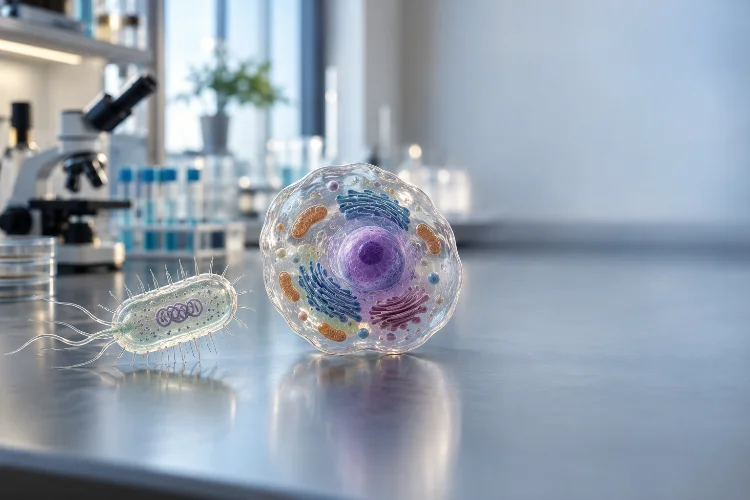
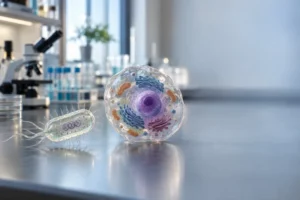
Cells belong to two broad categories: prokaryotic and eukaryotic. Their biggest difference is the way their internal contents are organized.
Prokaryotic cells do not have a nucleus or other membrane-bound organelles. Bacteria and archaea belong to this group. Their DNA is located within the cytoplasm instead of being enclosed in a separate nuclear compartment.
Eukaryotic cells have a membrane-enclosed nucleus and specialized internal structures called organelles. Animals, plants, fungi, and protists are made of eukaryotic cells. These compartments allow different biological tasks to take place in organized spaces.
Eukaryotic cells are generally more structurally complex, but prokaryotes are far from unsuccessful. Bacteria can reproduce quickly and survive in environments ranging from soil and ocean water to the human digestive system.
Important Cell Organelles and Their Jobs
Organelles are specialized structures that perform particular functions inside eukaryotic cells. You can imagine them as departments within a busy organization, although they constantly communicate and cooperate.
1. The Nucleus and Ribosomes
The nucleus contains most of a eukaryotic cell’s chromosomes and protects its genetic information. Small pores in the nuclear membrane regulate the movement of selected molecules between the nucleus and cytoplasm.
Ribosomes build proteins using instructions carried by genetic material. Some ribosomes float freely in the cytoplasm, while others are connected to the rough endoplasmic reticulum.
The endoplasmic reticulum helps produce proteins and lipids. The Golgi apparatus then modifies, sorts, and packages many of these materials before sending them to their proper destinations.
2. Mitochondria, Lysosomes, and Vacuoles
Mitochondria generate most of the chemical energy needed to power many reactions in eukaryotic cells. Cells with high energy demands, such as muscle cells, commonly contain large numbers of mitochondria.
Lysosomes contain substances that help break down damaged cell parts and unwanted materials. They work like a recycling system, allowing useful components to be reused.
Vacuoles store water, nutrients, or waste products. Plant cells usually have a large central vacuole that helps maintain internal pressure and provides structural support.
Plant Cells and Animal Cells
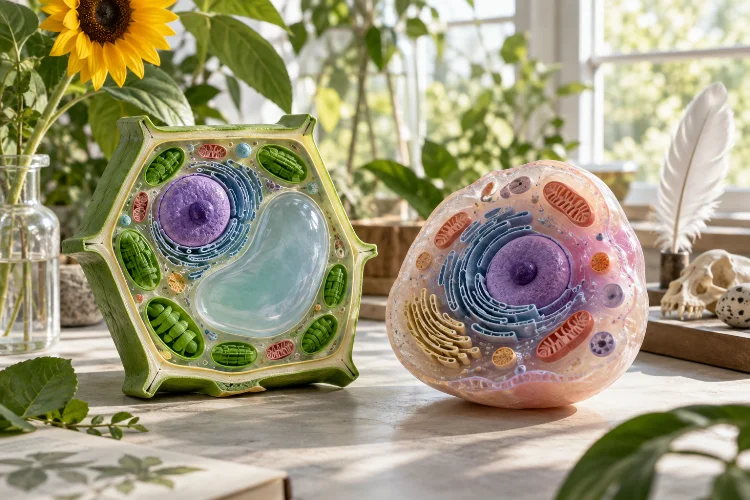
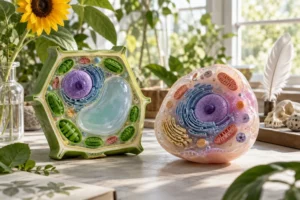
Plant and animal cells are both eukaryotic, so they contain nuclei, mitochondria, ribosomes, cytoplasm, and plasma membranes. However, their different lifestyles require several structural differences.
Plant cells have a rigid cell wall outside the plasma membrane. This wall provides protection and helps the plant maintain its shape.
They also contain chloroplasts, which capture light energy during photosynthesis, and usually have a large central vacuole. Animal cells do not have cell walls or chloroplasts, giving them greater flexibility in shape.
These differences illustrate a major principle of biology: structure supports function. A leaf cell is organized to capture sunlight, while a muscle cell is built to contract and create movement.
How Cells Use Energy
Every cell needs energy to build molecules, transport materials, repair damage, and maintain stable internal conditions. Without a continuous energy supply, essential cellular processes would eventually stop.
Cells commonly transfer usable energy through ATP, a molecule often described as the immediate energy currency of life. ATP releases energy that can be used to power chemical reactions and cellular activities.
In many eukaryotic cells, mitochondria help produce ATP by extracting energy from nutrients. Plant cells first capture sunlight through photosynthesis in chloroplasts, but they also perform cellular respiration to release usable energy from sugars.
A simple example occurs when you exercise. Your muscle cells use more ATP as they contract, so your breathing and heart rate increase to deliver additional oxygen and nutrients.
How Cells Communicate and Divide
Cells do not operate as isolated bubbles. They receive chemical and physical signals from their environment and from neighboring cells.
A signal may attach to a receptor on the plasma membrane and trigger a series of reactions inside the cell. These communication systems help coordinate metabolism, immune responses, growth, and tissue repair.
Cells can also reproduce through cell division. Before dividing, a cell copies its DNA so the resulting daughter cells receive the genetic information they need.
In multicellular organisms, carefully controlled cell division supports growth and replaces old or damaged cells. When this regulation fails, abnormal cell division may contribute to diseases such as cancer.
Why Is Cell Biology Important?
Cell biology connects tiny structures to some of the biggest questions about living organisms. Infections begin when pathogens interact with cells, inherited disorders may involve faulty genetic instructions, and many medicines work by changing specific cellular processes.
Research on cells supports developments in cancer treatment, vaccines, reproductive medicine, genetics, tissue engineering, and biotechnology. Everyday experiences such as healing a cut, gaining muscle after exercise, or developing a fever also depend on cellular activity.
Studying cells makes larger biological topics easier to understand. Once you know how membranes, DNA, proteins, organelles, and cell division work, subjects such as heredity, anatomy, evolution, and disease become far more connected.
So, what is a cell? It is the smallest structural and functional unit of life. Every known organism contains one or more cells, and every cell has the basic machinery needed to store information, manage energy, and maintain an internal environment.
Some cells survive independently, while others specialize and cooperate within complex organisms. Prokaryotic cells have a simpler internal arrangement, whereas eukaryotic cells contain a nucleus and membrane-bound organelles that organize different tasks.
The next time you look at a plant, animal, or your own body, remember that countless cellular processes are happening beneath the surface. Continue your biology journey by exploring how DNA controls protein production and how cells combine to form tissues and organs.