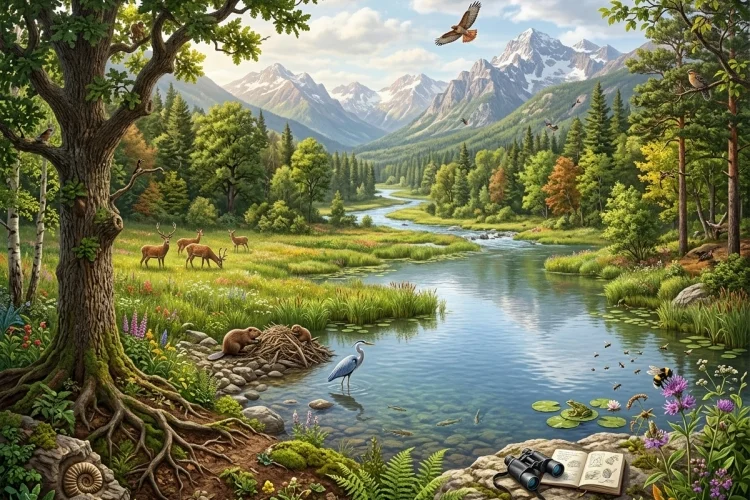
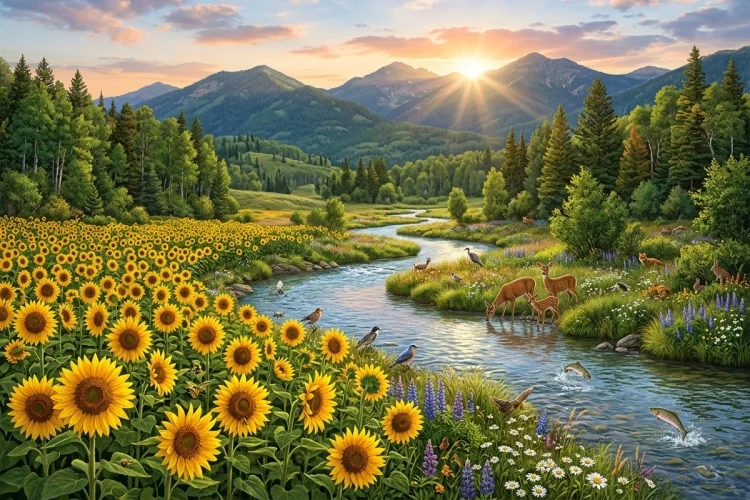
A sunflower turns toward the light, a cat pulls its paw away from a hot surface, and bacteria multiply in a drop of water. These organisms look completely different, yet they share a basic set of features that separates life from most nonliving matter.
So, what are the characteristics of living things? Biologists generally identify several connected traits, including cellular organization, energy use, homeostasis, growth, response to stimuli, reproduction, heredity, and evolutionary adaptation.
A single feature is not enough. Fire, for example, can grow, spread, and consume fuel, but that does not make it a living organism. Understanding the characteristics of life gives beginners a useful foundation for studying biology.
It also helps scientists explore more difficult questions, such as whether viruses should be classified as living and how we might recognize life beyond Earth. Let’s examine the major characteristics shared by living organisms using simple explanations and familiar examples.
1. Living Things Are Made of Cells
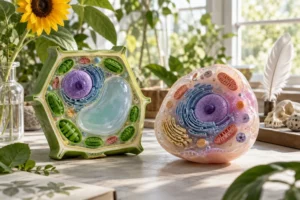
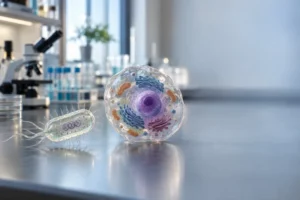
All known living organisms consist of one or more cells. A cell is considered the smallest basic unit that can perform the processes necessary for life.
Some organisms, including bacteria and many protists, are unicellular. This means that one cell must perform every essential task, such as obtaining nutrients, producing energy, responding to environmental changes, and reproducing.
Humans, animals, plants, and most fungi are multicellular organisms. Their cells become specialized and work together to form tissues, organs, and organ systems. In the human body, nerve cells carry signals, muscle cells create movement, and red blood cells transport oxygen.
This biological organization exists at several levels. Cells form tissues, tissues build organs, and organs cooperate within larger systems. These systems allow complex organisms to complete tasks that would be impossible for a single specialized cell.
Viruses are a notable exception. They contain genetic information, but they are not made of cells and cannot reproduce independently. This is one reason scientists continue to debate whether viruses should be considered living entities.
2. Living Organisms Obtain and Use Energy
Every living thing requires energy. Organisms use it to grow, move, repair damaged structures, transport materials, reproduce, and maintain stable internal conditions.
Plants, algae, and certain bacteria capture light energy through photosynthesis. They use that energy to produce organic molecules, including sugars. Animals and fungi obtain chemical energy by consuming organisms or organic materials.
The complete collection of chemical reactions occurring inside an organism is known as metabolism. These reactions are often divided into two broad groups.
Anabolic reactions build larger molecules, while catabolic reactions break molecules down and release usable energy.
Even when you are asleep, your metabolism remains active. Your heart continues to beat, your brain processes information, cells remove waste, and tissues perform repairs.
Energy use alone does not prove that something is alive. A car uses fuel, while fire consumes wood and oxygen. Living organisms are different because energy processing is connected to cells, genetic information, regulation, growth, and reproduction.
3. Living Things Maintain Homeostasis
The environment around an organism can change quickly, but its cells usually require relatively stable conditions. Homeostasis is the process through which a living system maintains its internal balance.
Humans regulate body temperature, blood glucose, water levels, acidity, and concentrations of important minerals. When your body becomes too hot, you sweat and send more blood toward the skin. These responses help release excess heat.
Homeostasis does not mean that internal conditions remain perfectly unchanged. Instead, it means that organisms detect changes and make adjustments to keep important variables within workable ranges.
Plants regulate their internal conditions as well. Tiny openings in their leaves, called stomata, can open or close to control gas exchange and reduce water loss. Individual cells also regulate which substances can cross their membranes.
Without homeostasis, enzymes and cells may stop working correctly. This makes internal regulation one of the most important characteristics of living organisms.
4. Organisms Grow, Develop, and Respond
Living things grow by increasing the size or number of their cells. However, biological growth is more organized than simply becoming larger.
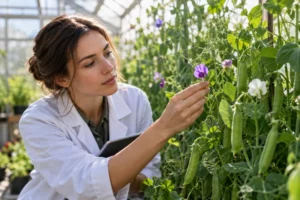
A fertilized human egg develops into an embryo, a baby, and eventually an adult through controlled cell division and specialization. Similarly, a seed can develop roots, stems, leaves, flowers, and fruit.
Development is guided partly by genetic information. Environmental factors such as nutrition, sunlight, water, temperature, stress, and disease can also influence the final result.
Imagine two genetically similar plants. One receives plenty of sunlight and water, while the other grows in poor soil with limited moisture. Their genes may be similar, but they may develop very differently.
Responding to Stimuli
Living organisms also respond to stimuli, which are detectable changes in their internal or external environment.
You pull your hand away from a hot object because sensory receptors detect danger. Plants grow toward light, roots grow toward water, and some flowers open or close according to daily light conditions.
Even single-celled organisms can respond. Certain bacteria move toward nutrients or away from harmful chemicals. These reactions do not require conscious thought; many biological responses happen automatically.
5. Living Things Reproduce and Pass On Genetic Information
Reproduction allows life to continue across generations. It may occur sexually, involving genetic material from two parents, or asexually, involving only one parent.
Many bacteria reproduce through binary fission, in which one cell divides into two. Plants may reproduce through seeds, but some can also produce new individuals from stems, roots, or leaves. Most animals reproduce sexually, although exceptions exist.
During reproduction, biological information is transferred to offspring. In nearly all known organisms, this information is stored in DNA. Genes influence characteristics such as body structure, metabolism, development, and certain aspects of behavior.
Offspring are not always exact copies of their parents. Sexual reproduction combines genetic material, while mutations can create new variations.
This genetic diversity is important because it gives populations different traits that may become useful when environmental conditions change.
Not every individual organism must reproduce to be considered alive. A sterile animal is still a living thing. Reproduction is better understood as a feature that allows populations and species to continue rather than an action every individual must complete.
6. Populations Adapt and Evolve
One of the most important characteristics of life appears across generations rather than within a single organism. Populations of living things can evolve.
Evolution occurs when inherited traits become more or less common over time. If a characteristic helps an organism survive and reproduce in a particular environment, natural selection may make that trait more widespread in future generations.
Antibiotic resistance is a practical example. Within a bacterial population, some individuals may carry genetic variations that help them survive an antibiotic. The surviving bacteria reproduce, causing resistance to become more common.
Individual organisms do not evolve during their lifetimes. A giraffe cannot make its neck genetically longer by stretching, and bacteria do not consciously decide to resist medication. Evolution affects populations through inherited variation, reproduction, environmental pressure, and time.
This ability to evolve is also important in the scientific search for extraterrestrial life. One definition frequently used in astrobiology describes life as a self-sustaining chemical system capable of Darwinian evolution.
7. Why Defining Life Is Not Always Simple
Scientists usually examine several characteristics together instead of relying on one perfect test. Some nonliving things display a few life-like properties.
Fire uses energy, grows, produces waste, and can spread. Crystals can increase in size, while computers can respond to information.
However, these things do not show the complete combination of cellular organization, metabolism, heredity, homeostasis, reproduction, and evolution found in known life.
Viruses sit close to the boundary between living and nonliving matter. They contain genes and can evolve, but they rely on host cells to reproduce. They also do not maintain their own independent metabolism or homeostasis.
The challenge becomes even greater when scientists search for life beyond Earth. Extraterrestrial organisms may not resemble familiar plants, animals, or microbes.
Researchers therefore look for biosignatures, including chemical patterns or environmental features that may provide evidence of biological activity.
The safest conclusion is that life is recognized through a connected system of characteristics rather than one isolated ability.
The main characteristics of living things include cellular organization, energy use, metabolism, homeostasis, growth, development, response to stimuli, reproduction, heredity, and evolution.
No single trait provides a perfect definition, but together they offer a practical way to separate living organisms from nonliving objects.
These features show that life is active, organized, and interconnected. From a tiny bacterium to a giant tree, every organism must manage energy, maintain internal conditions, interact with its surroundings, and belong to a population capable of change.
The next time you observe a plant, animal, fungus, or microorganism, look for these signs of life. Connecting biological concepts to everyday examples is one of the best ways to make science easier to understand and remember.