Take a moment to look at your hand. Under the skin, countless cells are producing energy, communicating, repairing damage, and working together to keep you alive.
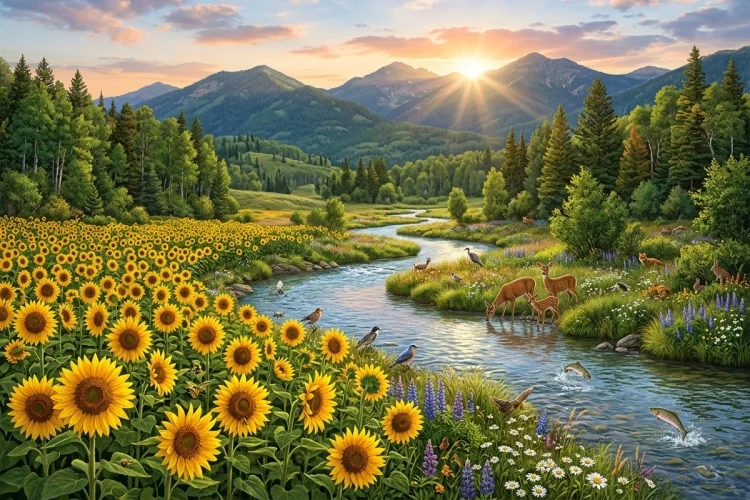
Outside your body, plants capture sunlight, microbes recycle nutrients, and animals constantly respond to their surroundings. Biology is the science that explains these processes.
It studies living organisms, how they function, reproduce, change, and interact with the environment. Its scope stretches from molecules inside a single cell to forests, oceans, and the entire biosphere.
For beginners, biology can seem like a long list of unfamiliar terms. However, it becomes much easier when you focus on a few connected ideas: cells, energy, genes, evolution, and ecosystems.
This guide answers the basic question “What is biology?” while introducing its central concepts, major branches, practical uses, and a simple way to start learning the science of life.
What Does Biology Study?
The word biology comes from the Greek words bios, meaning life, and logos, meaning study. Put simply, biology is the scientific study of life and living processes.
Biologists ask questions such as: How do cells work? Why do children resemble their parents? How do plants turn sunlight into food? Why do diseases spread? How do organisms survive in deserts, oceans, or freezing climates?
The field examines life at many levels, including molecules, cells, tissues, organs, organisms, populations, communities, ecosystems, and the biosphere.
OpenStax and the U.S. National Science Foundation describe modern biology as a science that investigates life across these different scales.
Biology also connects with chemistry, physics, mathematics, computer science, medicine, and environmental science.
A modern biologist might study proteins in a laboratory, analyze DNA using software, track wildlife using satellites, or investigate how infectious diseases spread.
What Makes Something Alive?
There is no single perfect test that separates every living thing from nonliving matter. Viruses, for example, contain genetic material and evolve, but they cannot reproduce without using a host cell.
Most living organisms share several characteristics. They are organized, use energy, grow, respond to stimuli, regulate internal conditions, reproduce, and evolve across generations.
Scientists usually consider these features together when discussing whether something is alive.
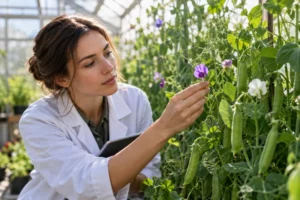
A houseplant offers a simple example. It absorbs water, uses sunlight to produce sugars, grows toward light, repairs damaged tissue, and may eventually produce seeds. Several characteristics of life are operating at the same time.
The question becomes even more interesting in astrobiology. NASA describes astrobiology as the study of the origin, evolution, and distribution of life in the universe, including the search for environments that might support life beyond Earth.
Cells, DNA, and Inheritance
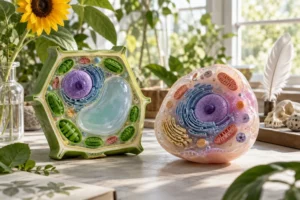
Every known living organism consists of one or more cells. Bacteria may survive as single cells, while humans contain many specialized cell types that combine to form tissues, organs, and organ systems.
Cells control what enters and leaves, transform energy, produce molecules, respond to signals, and reproduce through cell division. Cell biology examines these activities along with cellular structures, movement, communication, differentiation, aging, and death.
DNA and Genes
Cells store biological information in DNA, or deoxyribonucleic acid. DNA carries instructions that contribute to an organism’s development, survival, and everyday functioning.
Genes are sections of DNA that contribute to particular biological functions. Genetics studies inheritance and DNA variation, while genomics examines an organism’s complete set of DNA and how genes interact with one another and the environment.
Genes influence many traits, but they do not work alone. Nutrition, temperature, stress, lifestyle, and other environmental conditions can affect how biological traits develop. This is why modern biology often studies genes as parts of larger, interconnected systems.
Evolution Connects All Living Things
Evolution explains how populations change over many generations. Processes such as mutation, natural selection, genetic drift, and gene flow can make inherited characteristics more or less common within a population.
Individuals do not evolve during their lifetimes. Instead, populations evolve when inherited differences affect survival or reproduction. Antibiotic resistance is a practical example: bacteria with useful genetic variations may survive treatment and produce resistant descendants.
Evolution also explains why very different organisms share basic features. Humans, plants, fungi, and bacteria all use cells, DNA, and many similar biochemical processes because life is connected through evolutionary history.
For this reason, evolution is often called the unifying theory of biology. It provides a framework for understanding biodiversity, adaptation, fossils, disease-causing organisms, crop breeding, and conservation.
Major Branches of Biology
Biology is extremely broad, so it is divided into many overlapping specialties. Each branch focuses on a particular level, type of organism, or biological process.
1. Cell Biology, Molecular Biology, and Genetics
Cell biology focuses on the structure and behavior of cells. Molecular biology studies biological activity at the level of DNA, RNA, proteins, and other molecules. Genetics concentrates on inheritance, genes, and biological variation.
2. Microbiology, Botany, and Zoology
Microbiology explores microscopic organisms such as bacteria, archaea, fungi, and protozoa. Botany focuses on plants, while zoology examines animals, including their anatomy, behavior, development, and evolution.
3. Ecology and Other Fields
Ecology studies relationships among organisms and between living things and their surroundings. An ecosystem includes a biological community together with nonliving factors such as water, air, sunlight, temperature, and soil.
Other important branches include anatomy, physiology, neuroscience, marine biology, biotechnology, developmental biology, evolutionary biology, and astrobiology.
Someone interested in medicine may prefer physiology or genetics, while a person fascinated by wildlife may enjoy zoology or ecology.
Why Biology Matters in Everyday Life
Biology influences decisions about health, nutrition, exercise, medicine, agriculture, wildlife, and the environment. Reading a food label, understanding vaccination, using antibiotics correctly, or growing a garden all involve biological knowledge.
Researchers apply biology to diagnose diseases, develop medical treatments, improve crops, protect endangered species, manage ecosystems, and create biotechnology.
Ecological research also shows why people depend on functioning natural systems for clean water, fertile soil, food, and other essential resources.
Biology teaches scientific thinking as well. Biologists make observations, form testable explanations, collect evidence, analyze results, and revise conclusions when better evidence becomes available.
This approach helps people evaluate health and environmental claims rather than accepting them simply because they sound scientific. In a world filled with misleading headlines and online misinformation, basic biological literacy is increasingly valuable.
How Beginners Can Learn Biology
Begin with the major ideas instead of trying to memorize every technical term. Ask how each new topic relates to cells, energy, biological information, evolution, or the environment.
Connecting lessons to familiar experiences can make difficult concepts easier. You might study respiration by thinking about exercise, genetics by examining family traits, microbiology through yogurt or bread making, and ecology by observing a garden, beach, forest, or pond.
Diagrams and short educational videos are especially helpful for processes that cannot be seen directly, such as DNA replication, cell division, photosynthesis, and protein production.
After learning a concept, try explaining it in your own words. When the explanation still feels confusing, return to the main idea before adding more details. Most importantly, follow your curiosity and begin with a branch that genuinely interests you.
So, what is biology? It is the science of life, covering everything from DNA and cells to organisms, evolution, and ecosystems.
Although the subject contains many branches, they are connected by shared questions about how living systems are organized, how they use energy, and how they change.
Learning biology can help you better understand your body, other species, disease, food production, and the natural world.
You do not need to master every scientific term immediately. Begin with the central concepts, connect them to familiar examples, and build your knowledge step by step.
Choose one topic-perhaps genetics, microbiology, zoology, or ecology-and explore it further. Curiosity is one of the best tools for beginning your journey into the science of life.