Why do polar bears have thick fur, while desert animals are better equipped to handle extreme heat? Why are bacteria sometimes able to resist medicines that once killed them? The answer to both questions involves evolution.
So, what is evolution and how does it work? In biology, evolution is the change in the inherited characteristics of a population across generations. These changes happen when genetic variants become more or less common over time.
Evolution does not mean that an individual animal suddenly transforms into a different species. It usually involves small changes accumulating in populations over many generations. Those changes are shaped by mutation, natural selection, genetic drift, gene flow, and reproduction.
This process explains the diversity of life, from microscopic bacteria to giant whales. It also helps scientists understand genetics, disease, agriculture, conservation, and the history of living organisms.
In this beginner-friendly guide, we will explore the basic mechanisms of evolution, examine the evidence behind it, and clear up several common misunderstandings.
What Does Evolution Actually Mean?
Evolution refers to changes in the genetic makeup of a population over generations. More specifically, it can be measured as changes in the frequencies of alleles, which are different versions of genes.
A population is a group of organisms from the same species living and reproducing in a particular area. Individuals within that group are usually similar, but they are not genetically identical.
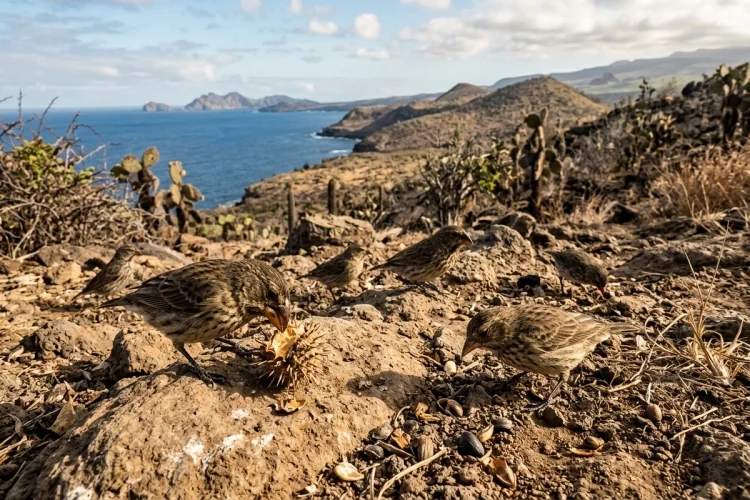
Some birds may have slightly larger beaks, for example, while certain plants may tolerate dry conditions better than others. When these differences are heritable, they can be passed to offspring and potentially influence future generations.
This leads to one of the most important rules for beginners: individuals do not evolve; populations do. A rabbit cannot develop thicker fur during its lifetime and genetically pass that acquired change to its offspring.
However, rabbits with inherited traits that improve survival in a cold environment may leave more descendants.
Evolution can produce small changes within a species, but over long periods it may also contribute to the formation of entirely new species.
Genetic Variation Is the Raw Material of Evolution
Evolution requires variation. If every member of a population were genetically identical, evolutionary forces would have little inherited diversity to act upon.
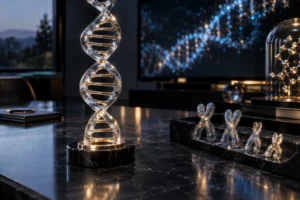
Mutation is the ultimate source of new alleles. A mutation is a change in DNA that may occur during DNA replication or after exposure to certain environmental factors.
Most mutations are neutral or have no obvious effect. Some are harmful, while a small number may become helpful under particular conditions.
Sexual reproduction also creates new combinations of existing alleles. During the formation of egg and sperm cells, chromosomes exchange and rearrange genetic material. Offspring therefore receive combinations that differ from those of either parent.
A trait does not have to be physically visible to matter. Genetic variation can influence metabolism, disease resistance, behavior, fertility, or the ability to survive environmental stress. Genomic variation supports biodiversity and gives natural selection differences on which to act.
How Natural Selection Works
Natural selection is the best-known mechanism of evolution. It occurs when individuals with certain inherited traits leave more surviving offspring than others in the same environment.
The basic process requires variation, inheritance, environmental pressure, and differences in reproductive success. When these conditions occur repeatedly, beneficial alleles may become more common.
Imagine a population of insects containing both green and brown individuals. If the insects live on brown tree bark, birds may spot the green insects more easily.
Brown coloration could provide better camouflage. If brown insects survive and reproduce more successfully, alleles associated with that color may become increasingly common over generations.
What Does “Fittest” Mean?
The phrase “survival of the fittest” is often misunderstood. In evolutionary biology, fitness does not necessarily mean being the strongest, fastest, or most aggressive.
Fitness refers mainly to reproductive success in a particular environment. An organism is evolutionarily fit when its inherited traits help it survive long enough to produce viable offspring.
A helpful trait in one environment may be useless or harmful in another. Thick fur could improve survival in a cold climate but create problems in extreme heat.
Natural selection also has no future plan. It does not give organisms what they need because they are trying hard to survive. Instead, it acts on inherited variation that already exists or appears through mutation.
Other Mechanisms That Drive Evolution
Natural selection is important, but it is not the only force that changes populations. Mutation, genetic drift, and gene flow also shape evolutionary outcomes.
1. Mutation
Mutations introduce new genetic variants. A mutation may initially appear in one individual, but it can enter the wider population if that organism reproduces.
A mutation does not occur because a species needs it. The environment may influence whether the resulting trait becomes useful, harmful, or effectively neutral.
2. Genetic Drift
Genetic drift is a random change in allele frequencies. It is especially influential in small populations, where chance events can remove genetic variants regardless of whether they are helpful.
Suppose a storm randomly kills most members of a small island population. The survivors may carry only part of the original genetic diversity.
The population’s future genetic makeup will then reflect which individuals happened to survive. This is evolution through chance rather than superior adaptation.
3. Gene Flow
Gene flow occurs when organisms-or their reproductive cells-move between populations and introduce alleles into a new gene pool.
Pollen carried between plant populations is a simple example. An animal that migrates and reproduces in a different population can also transfer genetic variants.
Gene flow may increase diversity within a population. It can also make separate populations more genetically similar. Together, natural selection, mutation, drift, and gene flow continually influence the genetic composition of living populations.
How Evolution Can Create New Species
A new species can form when populations become sufficiently different and reproductively isolated. This process is called speciation.
Geographic separation is one common starting point. A river, mountain range, island, or other barrier may divide one population into two groups.
Once separated, the groups experience different mutations, chance events, and environmental pressures. Their physical traits, behaviors, and genetic makeup may gradually diverge.
Eventually, they may no longer be able to reproduce successfully with each other, even if they later meet. At this stage, scientists may classify them as separate species.
Speciation does not always require a geographic barrier. Differences in mating behavior, breeding season, food preference, or chromosome structure can also reduce reproduction between groups living in the same general area.
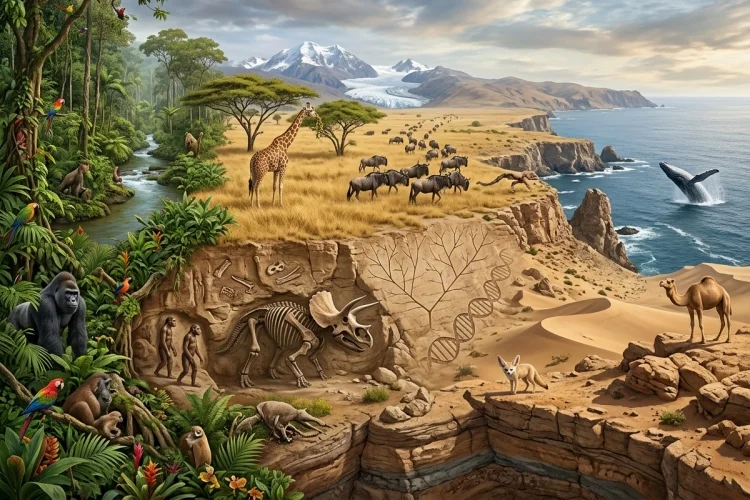
The tree of life branches through these lineage-splitting events. One ancestral population can eventually give rise to two or more distinct evolutionary lineages.
What Evidence Supports Evolution?
Evolution is supported by several independent forms of scientific evidence. These sources agree with one another, creating a detailed picture of how living organisms have changed.
Fossils reveal organisms that lived in the past and document changes in anatomy across geological time. Scientists can compare fossils from different rock layers and use dating methods to estimate their ages.
Comparative anatomy provides another clue. The forelimbs of humans, bats, whales, and cats perform different tasks, yet they share a similar arrangement of bones. These homologous structures point to inherited anatomy from common ancestors.
DNA offers especially powerful evidence. Closely related species generally have more similar genetic sequences than distantly related organisms. Researchers can use these differences to reconstruct evolutionary relationships.
Biogeography-the study of where organisms live-also reveals patterns. Island species often resemble those from nearby continents while developing unique features after long periods of isolation.
Evolution can even be observed today. Microbial populations can change rapidly because they reproduce quickly. Antibiotic use, for example, creates selection pressure that allows resistant bacteria to survive and reproduce, making resistance more common.
Common Misunderstandings About Evolution
One common misconception is that evolution is “just a theory.” In everyday language, a theory may mean a guess. In science, a theory is a broad explanation supported by extensive evidence and capable of generating testable predictions.
Another misunderstanding is that humans descended from modern monkeys or apes. Humans and modern apes instead share ancestors that lived in the past. Both lineages have continued evolving since they separated.
Evolution also does not always make organisms more complex. A trait may become simpler or disappear if maintaining it no longer improves reproductive success.
It is also incorrect to view evolution as a ladder with humans at the top. Evolution is better represented as a branching tree. Every living species is the result of a long evolutionary history and is adapted to its own ecological circumstances.
Finally, evolution does not claim that every trait is perfect. Natural selection works with available variation and is limited by ancestry, biological trade-offs, and changing environments.
Why Understanding Evolution Matters
Evolution is not only a story about ancient fossils. It has practical applications in medicine, agriculture, conservation, and public health.
Doctors and microbiologists use evolutionary ideas to understand how pathogens change and develop resistance. Cancer researchers examine how genetically different tumor cells respond to treatment.
Agricultural scientists use evolutionary knowledge to manage pests, breed crops, and preserve useful genetic diversity. Conservation biologists study population size, gene flow, and adaptation when protecting endangered species.
Evolution also connects many branches of biology. It helps explain why organisms share cellular machinery, why species have particular structures, and how environmental changes influence populations.
Once you understand evolution, biology becomes less like a list of unrelated facts and more like one connected history of life.
Evolution is the change in inherited characteristics within populations across generations. It works through mutation, natural selection, genetic drift, gene flow, and reproductive processes that alter genetic variation over time.
Natural selection favors inherited traits that improve reproductive success in a specific environment, while drift introduces random changes and gene flow moves alleles between populations.
When groups become reproductively isolated and continue diverging, new species may eventually form. Evidence from fossils, anatomy, DNA, biogeography, and observed population changes strongly supports this scientific framework.
Continue your biology journey by exploring natural selection in more detail and looking for examples of adaptation in organisms around you. Evolution becomes much easier to understand when you connect it to real populations and changing environments.