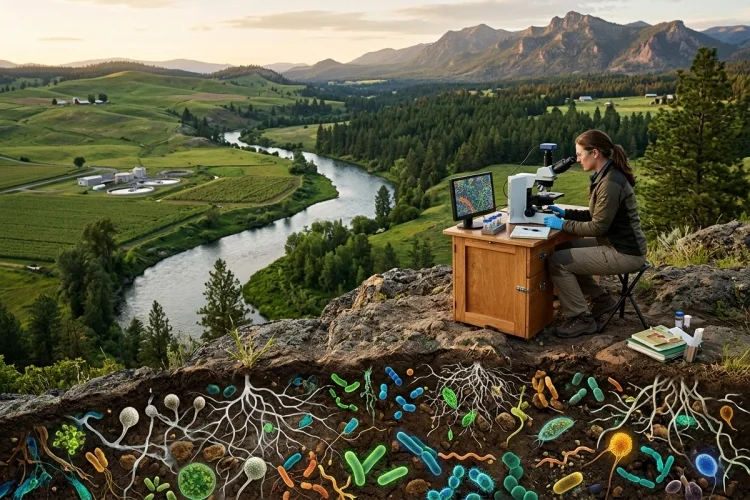
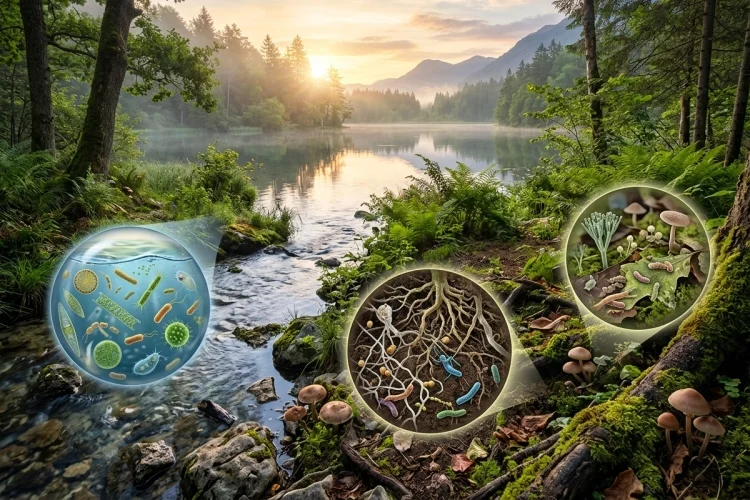
A busy world exists on your skin, inside your digestive system, beneath the soil, and across every drop of natural water. Most of its inhabitants are so small that you cannot see them without a microscope.
These tiny biological forms are known as microorganisms, or microbes. They include bacteria, archaea, fungi, protozoa, and microscopic algae. Viruses are also commonly studied alongside microbes, although they are not cellular organisms and cannot reproduce without a host.
So, what are microorganisms, and should we be worried about them? Some microbes cause infections, spoil food, or damage crops. However, many are harmless, and countless others are essential to human health and the environment.
Microorganisms help digest food, recycle nutrients, make bread rise, produce medicines, and break down pollutants. Without them, ecosystems would struggle to function.
This beginner-friendly guide explores the major types of microorganisms, where they live, how they reproduce, and why the invisible microbial world is far more helpful-and fascinating-than many people realize.
What Are Microorganisms?
Microorganisms are biological forms that are generally too small to be seen clearly with the unaided eye. Scientists use microscopes, laboratory cultures, chemical tests, and genetic technologies to study them.
Microbes are incredibly diverse. They occur across all three domains of cellular life: Bacteria, Archaea, and Eukarya. Eukaryotic microorganisms include many fungi, protozoa, and algae.
Some microorganisms consist of a single cell, while others form multicellular structures or colonies. Their sizes, shapes, diets, and lifestyles vary widely.
The term microbe is also often used broadly enough to include viruses. Unlike cellular microorganisms, viruses contain genetic material inside a protective protein structure and must infect a host cell to reproduce.
The Main Types of Microorganisms
Microorganisms are not one closely related group. Instead, the term describes many small biological forms with very different structures and evolutionary histories.
1. Bacteria
Bacteria are single-celled prokaryotes, meaning their cells do not have a membrane-enclosed nucleus. They can be found in soil, water, food, animals, plants, and the human body.
Some bacteria cause diseases, including tuberculosis and certain forms of food poisoning. Many others are harmless or useful. Bacteria help decompose organic material, support digestion, produce fermented foods, and make nutrients available to plants.
2. Archaea
Archaea are also single-celled prokaryotes, but they differ from bacteria in their genetics, membranes, and biochemical processes. They form a separate domain of life.
Some archaea live in extremely salty, hot, acidic, or oxygen-free environments. However, they are not limited to extreme habitats. Researchers have also found them in oceans, soil, wetlands, and digestive systems.
3. Fungi
Microscopic fungi include yeasts and molds. Their cells contain nuclei, making them eukaryotes.
Yeast is used to make bread, beer, and other fermented products. Certain molds contribute to food production and medicine, while others spoil food or cause infections.
4. Protozoa and Microscopic Algae
Protozoa are mostly single-celled eukaryotes commonly found in water, moist soil, and living hosts. Many are harmless, but some are parasites. Malaria, for example, is caused by Plasmodium parasites transmitted through mosquito bites.
Microscopic algae use photosynthesis to capture light energy. They form an important part of aquatic food webs and contribute to oxygen production.
Where Do Microorganisms Live?
Microorganisms live almost everywhere that liquid water and usable energy are available. They occupy oceans, rivers, soil, ice, hot springs, deep underground environments, and the bodies of other organisms.
Even places that appear clean may contain microbial communities. A kitchen counter, smartphone screen, or glass of untreated water can support microorganisms too small to see.
The conditions that suit one species may be deadly to another. Some microbes require oxygen, while others can survive only where oxygen is absent.
Different organisms also prefer particular temperature, acidity, moisture, and nutrient levels.
Microbes can live independently, form communities, or establish relationships with larger organisms. These relationships may be beneficial, neutral, or harmful.
A dense microbial community can create a biofilm, a structured layer in which cells attach to a surface and produce protective material around themselves. Dental plaque is a familiar example.
Microorganisms in the Human Body
The human body is home to complex communities of bacteria, fungi, viruses, and other microbes. Together with their genes and surrounding environment, these communities are commonly called the human microbiome.
Microbial communities differ between body areas. The organisms living on the skin face different conditions from those in the mouth or large intestine.
Many resident microbes form beneficial relationships with us. Gut microorganisms can help process parts of food, produce useful compounds, and interact with the immune system.
Healthy microbial communities may also make it harder for invading pathogens to establish themselves.
However, microbiome science is still developing. Finding a link between a microbial pattern and a disease does not automatically prove that the microbes caused the condition.
The microbiome can be influenced by diet, age, environment, medication, illness, and many other factors. This is one reason two healthy people may have noticeably different microbial communities.
How Microorganisms Help Nature and Human Society
Microorganisms are among the planet’s most important recyclers. They break down dead plants, animals, and waste, releasing materials that other organisms can use again.
Microbes also participate in major nutrient cycles. Certain bacteria transform nitrogen into forms that support plant growth, while other microorganisms move carbon and sulfur through ecosystems.
In food production, microbes power fermentation. Yeasts make dough rise, and lactic acid bacteria are used in products such as yogurt, cheese, and fermented vegetables. USDA research also examines how microorganisms influence food safety, agriculture, and fermentation.
Industries use microbial biotechnology to produce enzymes, vaccines, medicines, chemicals, and agricultural products. Because many microbes grow quickly, they can act as efficient miniature biological factories.
Microorganisms can even assist with environmental cleanup. Biodegradation occurs when bacteria, fungi, or yeasts break complex substances into simpler products. Bioremediation uses or supports these natural processes to reduce pollution in soil and water.
When Microorganisms Cause Disease
A microorganism capable of producing disease is called a pathogen. Pathogens may damage cells directly, release toxins, trigger harmful inflammation, or interfere with normal organ functions.
Infections can spread through respiratory particles, contaminated food or water, body fluids, surfaces, animals, or vectors such as mosquitoes and ticks. The route depends on the organism involved.
Exposure to a pathogen does not always result in illness. The outcome may depend on the amount of exposure, the microbe’s characteristics, vaccination status, age, existing health conditions, and immune function.
Parasites provide a good example of microbial variety. Some protozoan parasites live in the blood or tissues and may be transmitted through insect bites. Others enter through contaminated food, water, or soil.
It is important to remember that only a fraction of microbes cause disease. Treating every microorganism as dangerous ignores their essential roles in healthy bodies and ecosystems.
How Microorganisms Grow and Change
Many bacteria reproduce through binary fission, in which one cell copies its genetic material and divides into two cells. Under favorable conditions, some bacterial populations can increase rapidly.
Yeasts may reproduce by budding, while microscopic fungi can produce spores. Protozoa use several forms of sexual or asexual reproduction depending on the species.
Viruses follow a different strategy. They enter suitable host cells and redirect cellular machinery to produce new viral components.
Microbes can also change through mutation and genetic exchange. These processes allow populations to adapt to environmental pressures.
One major concern is antimicrobial resistance. This occurs when bacteria, fungi, or other microbes develop ways to survive medicines that previously controlled them.
Antibiotic and antifungal use can create selection pressure that favors resistant organisms.
Antibiotics should therefore be used only when medically appropriate. They treat certain bacterial infections, not viral illnesses such as colds or influenza.
How Scientists Study Microorganisms
Microscopy allows scientists to examine microbial size, shape, arrangement, and internal details. Different stains can make particular structures easier to see.
Researchers may also grow microbes on nutrient-containing materials. Visible groups of cells, called colonies, can then be analyzed through biochemical or genetic tests.
However, many microorganisms are difficult to grow under standard laboratory conditions. DNA sequencing helps researchers identify them directly from samples taken from soil, water, food, or the human body.
Metagenomics goes a step further by analyzing genetic material from entire microbial communities. This approach helps scientists study organisms that would otherwise remain undetected.
Microbiologists use these methods to diagnose infections, monitor food safety, investigate outbreaks, develop medicines, improve crops, and understand ecosystems.
Microorganisms are tiny biological forms that include bacteria, archaea, fungi, protozoa, and microscopic algae. Viruses are also commonly studied as microbes, although they depend on host cells for reproduction.
A small number of microorganisms cause infections, but many more are harmless or beneficial. They support digestion, produce food, recycle nutrients, improve agriculture, power biotechnology, and help clean polluted environments.
Understanding microbes gives us a more accurate view of the natural world. Invisible does not mean unimportant-and it certainly does not always mean dangerous.
Continue your biology journey by choosing one microbial group, such as bacteria, fungi, or protozoa, and exploring how its members live. You may be surprised by how much of everyday life depends on organisms you cannot see.