
The human body can walk, think, digest food, fight infections, repair injuries, and perform thousands of other tasks. Yet none of these abilities depends on one structure working alone. Your body functions through an incredibly organized network of smaller parts.
So, how is the human body organized? Scientists usually explain its structure through six main levels: chemical, cellular, tissue, organ, organ system, and organismal. Each level is built from the one below it, creating a sequence that moves from tiny molecules to the complete human body.
Think of it like building a city. Individual materials form buildings, buildings create neighborhoods, and neighborhoods connect through transportation, energy, and communication systems. In a similar way, cells form tissues, tissues build organs, and organs cooperate in body systems.
Understanding these levels of organization makes anatomy and physiology much easier to learn. It also explains why a problem beginning in one small group of cells can eventually affect an entire organ-or even the whole body.
1. The Chemical Level: The Body’s Smallest Building Materials
The first level of organization is the chemical level. It includes atoms and molecules that form the materials needed for life.
Atoms are the smallest units of chemical elements. The human body contains many elements, but oxygen, carbon, hydrogen, and nitrogen make up much of its mass.
Calcium strengthens bones, iron helps blood transport oxygen, and sodium supports nerve and muscle activity.
Atoms join together to create molecules. Water is one of the most important examples, as it provides the environment in which many chemical reactions occur. Proteins, carbohydrates, fats, and nucleic acids are larger biological molecules with specialized roles.
DNA stores genetic information, proteins perform structural and chemical jobs, and carbohydrates provide a useful energy source. Although molecules are not alive by themselves, their organized interactions make cellular life possible.
2. The Cellular Level: The Basic Units of Life
Molecules combine to build cells, the smallest living units in the human body. Every tissue and organ ultimately depends on cells performing their individual jobs.
Human cells are eukaryotic, meaning they contain a nucleus and specialized internal structures called organelles.
The nucleus stores most of the cell’s DNA, while mitochondria help produce usable energy. Ribosomes build proteins, and the cell membrane regulates what enters and leaves.
The body contains trillions of cells, but they are not all identical. Different cell types develop structures that match their functions. Red blood cells transport oxygen, nerve cells send signals, and muscle cells contract to create movement.
This specialization is one reason multicellular life can become so complex. Instead of requiring every cell to perform every task, the body divides responsibilities among many types of cells.
Why Cell Specialization Matters
Most body cells contain essentially the same genetic information, yet they use different parts of it. A skin cell activates genes needed for protection, while a pancreatic cell may activate genes involved in producing digestive enzymes or hormones.
Specialization makes the body more efficient. However, it also means that cells must communicate and cooperate constantly.
3. The Tissue Level: Similar Cells Working Together
A tissue is a group of cells and surrounding materials organized to perform related functions. The human body contains four basic tissue categories: epithelial, connective, muscle, and nervous tissue.
Epithelial tissue covers surfaces, lines internal spaces, and forms many glands. Your outer skin is epithelial tissue, but this category also includes the linings of the digestive and respiratory tracts.
Connective tissue supports, binds, stores, transports, and protects. Bone, cartilage, fat, tendons, and blood are all forms of connective tissue, even though they look very different.
Muscle tissue produces movement by contracting. Skeletal muscle moves the bones, cardiac muscle pumps blood through the heart, and smooth muscle helps move materials through internal organs.
Nervous tissue specializes in rapid communication. It detects changes, processes information, and carries electrical signals through the brain, spinal cord, and nerves.
4. The Organ Level: Different Tissues Form Working Structures
An organ is a recognizable body structure composed of two or more tissue types working together. Most organs contain all four major tissue categories in different amounts.
Consider the stomach. Its epithelial tissue produces protective mucus and digestive substances. Smooth muscle mixes food, connective tissue provides support, and nervous tissue helps coordinate movement and secretion.
The heart is another clear example. Cardiac muscle generates the force needed to pump blood, while connective tissue supports the structure. Epithelial tissue lines its surfaces, and nervous tissue helps regulate its activity.
An organ is more than a collection of materials. Its tissues are arranged in a specific way that allows the structure to perform particular tasks.
Damage to one tissue can therefore affect the performance of the entire organ. A problem with cardiac muscle, blood supply, or electrical communication can all reduce how effectively the heart pumps.
5. The Organ System Level: Organs Cooperating
An organ system consists of multiple organs that work together to perform major body functions.
The human body is commonly divided into 11 organ systems: integumentary, skeletal, muscular, nervous, endocrine, cardiovascular, lymphatic, respiratory, digestive, urinary, and reproductive.
The digestive system includes structures such as the mouth, esophagus, stomach, intestines, liver, gallbladder, and pancreas. Together, they break food into smaller substances that the body can absorb and use for energy, growth, and repair.
The respiratory system brings oxygen into the body and removes carbon dioxide. The cardiovascular system then transports these gases through the blood.
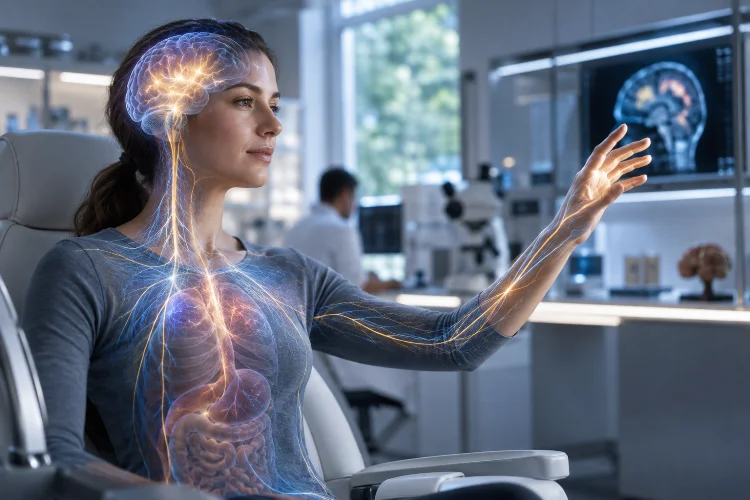
The urinary system filters the blood and helps control water, mineral, and acid-base balance. Meanwhile, the nervous and endocrine systems coordinate activities by sending electrical and chemical messages.
These divisions are useful for learning, but organ systems are not truly independent. Almost every major body process involves several systems at once.
6. How Body Systems Work Together
Imagine that you start running. Your muscular system immediately needs more energy, while the respiratory system brings additional oxygen into the lungs.
The cardiovascular system increases blood flow to deliver oxygen and nutrients to active muscles. The nervous system controls movement and adjusts breathing, while the endocrine system releases hormones that help manage energy.
Your skin produces sweat, and blood vessels near the surface change their diameter to release heat. The urinary system later helps regulate fluids and minerals lost during exercise.
Even eating a meal requires cooperation. The digestive system processes food, the cardiovascular system distributes absorbed nutrients, and the endocrine system helps regulate blood glucose.
This teamwork shows why the body should not be viewed as a collection of separate machines. It is a connected biological network in which changes in one area can influence many others.
7. The Organismal Level: The Complete Human Body
The highest structural level is the organismal level. At this point, every cell, tissue, organ, and organ system contributes to one complete living person.
The body must coordinate all these levels to maintain homeostasis, or relatively stable internal conditions. Temperature, blood glucose, water balance, blood pressure, and acidity must remain within workable ranges.
Homeostasis does not mean that the body never changes. Instead, it means that changes are detected and corrected when necessary.
For example, when body temperature rises, sweating and increased blood flow near the skin help release heat. When blood glucose changes after eating, hormones help cells store or use the available nutrients.
The human body contains thousands of control processes that detect disturbances and produce responses. Homeostasis involves every organ system rather than belonging to only one part of the body.
Why Understanding Body Organization Matters
Learning how the human body is organized helps connect basic biology to health and disease. A medical condition may begin at the chemical or cellular level before producing visible symptoms.
Cancer, for example, begins when the normal regulation of particular cells breaks down. As those cells multiply, they may disrupt a tissue, damage an organ, and eventually affect several systems.
The levels of organization also help healthcare professionals choose the right approach. A treatment might target a molecule, destroy harmful cells, repair tissue, support an organ, or stabilize an entire body system.
For students, this framework makes complex anatomy more manageable. Instead of memorizing isolated body parts, you can ask how each structure fits into the larger biological hierarchy.
The human body is organized through six connected levels: chemical, cellular, tissue, organ, organ system, and organismal.
Atoms form molecules, molecules support cells, similar cells create tissues, and multiple tissues build organs. Those organs then cooperate within systems to keep the entire person alive.
No level functions completely on its own. A small cellular change can influence a tissue, while a problem in one organ system may affect the rest of the body. This constant cooperation makes human biology both complex and fascinating.
Continue exploring by choosing one organ system, such as the digestive, nervous, or cardiovascular system. Study its main organs and then trace how it interacts with the other systems during an everyday activity.